Lake Geneva restoration project blooms thanks to Grow for Birds Plant Grant and volunteers
Donated plants jumpstart native gardens on former golf course
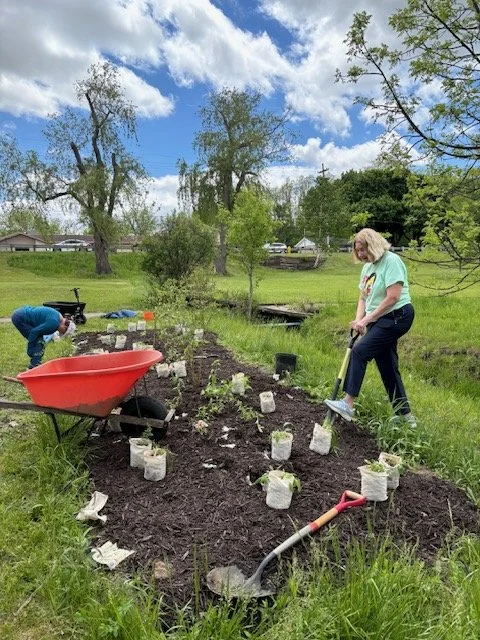
Lake Geneva Avian Committee plants native plants
LAKE GENEVA – A City of Lake Geneva project transforming a small part of an overgrown, invasive species-choked golf course into a public garden is starting to bloom thanks to local volunteers and a Grow for Birds Plant Grant provided by a Wyocena native plant nursery and two statewide bird organizations.
The Grow for Birds Plant Grant from White Pelican Farm in Wyocena, SOS Save Our Songbirds and Lake Michigan Bird Observatory’s Bird City Wisconsin Program, provided $500 in native plants in 2026 from the nursery.
Lake Geneva Avian Committee and Friends of Hillmoor members took the two-hour drive up to White Pelican Farm and filled a borrowed van with close to 90 donated plants on May 15, Committee Chair Sarah McConnell said.
“We spent one day covering the site with newspapers and mulch and the next day digging and planting,” she said. “So far, our primary challenges have been keeping the plants watered and safe from hungry deer.
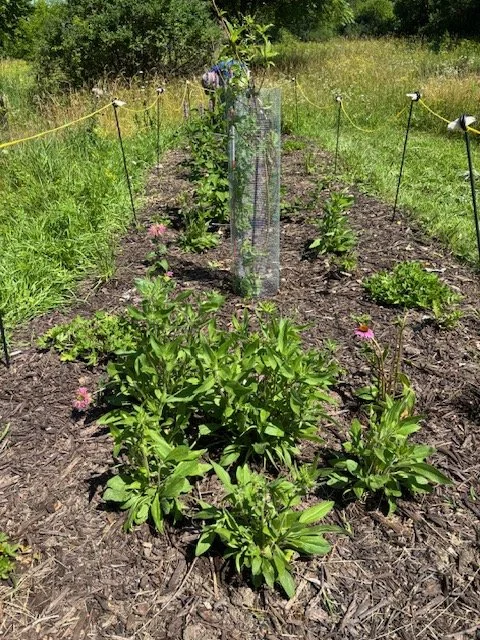
“During our weekly visits to the site, we haul in 10-plus gallons and pull up any weeds. Most of the plants are taking hold and are starting to bloom!”
Former golf course gets a reboot to nurture nature and community interest
The project is part of efforts to transform Hillmoor, a 200-acre golf course located along Highway 50 that closed in 2007 and became overgrown and neglected. The city acquired it in 2023 and recently opened it to the public as a nature area.
The Lake Geneva Avian Committee applied for and received the Grow for Plants Plant Grant to help start two native pollinator beds along the bank of a small stream that flows under Highway 50 to the White River, which flows into Geneva Lake.
Geneva Lake Conservancy's "Conservation at Home" members visited the site and provided extensive information on managing invasives, native friendly landscapers, and plant, shrub and tree recommendations.
Volunteers removed invasive trees and plants like buckthorn, honeysuckle and reed canary grass from the project area to prepare for planting next spring. The Lake Geneva Avian Committee presented their planting plan to the Park Board and the City’s Hillmoor Commission. Once granted access, the committee contracted with a professional landscaper in late March to have the area tilled and mushroom compost added.
In April, the owners of the donating nursery, White Pelican Farm, visited the site and discussed the layout and steps needed to further prepare the site. White Pelican Farm was started by retired natural resources manager Erin Crain-Sullivan and now operated with sons Jack and Riley.
White Pelican Farm donates one native plant to a small number of conservation groups for every native plant sold; SOS Save Our Songbirds is on their list of recipient organizations and directs their donated plants to seed the Grow for Birds Plant Grant.
“Our family greatly enjoys being a part of these local efforts to support Wisconsin’s wildlife,” says Crain-Sullivan, who has a master’s degree in ecological restoration and started the native nursery to help more people plant with wildlife in mind. “We’re inspired by these volunteers’ work and commitment and the impact their garden is already having. It’s often these smaller local initiatives that get the wider public involved in conservation.”
McConnell reports that local interest in the site is growing too. Lakeland Audubon has donated and helped to install a kestrel box nearby the site. A grant for a picnic table from AARP was applied for from the Friends of Hillmoor. The Park Board and Hillmoor Commission have scheduled bridge repair next to the site and have been keeping a path mowed for easy access.
Lake Geneva won the plant grant for its approach enhancing bird habitat and water quality, thoughtful planning, and emphasis on accessibility, says Kelsey Bell, the Bird City Wisconsin program director.
“One aspect of the project that really stood out was their emphasis on access for all and their plans for educational signage,” Bell says. “The signage will help residents of all backgrounds learn about native plants, wildlife, and the benefits of restoring habitat in their own community. Well-rounded projects like these are exactly what Bird City Wisconsin is about!”
Bird City Wisconsin is a program of the Lake Michigan Bird Observatory that recognizes communities for meeting requirements for protecting birds and habitat and educating residents on the same. Lake Geneva is joined by 89 other communities designated as Bird Cities in Wisconsin.